The Plant Computational Genomics Lab in the Department of Ecology and Evolutionary Biology at the University of Connecticut seeks motivated PhD students to join the lab in Fall 2027. Our research applies computational approaches to genomic and transcriptomic data from forest trees and other species of conservation concern, with work spanning genome and pangenome assembly, structural and functional annotation, structural variation, population and landscape genomics, and epigenomic regulation. We combine machine learning and computational statistics with high throughput sequencing to address questions in genome evolution, adaptation to environmental change, and disease resistance.
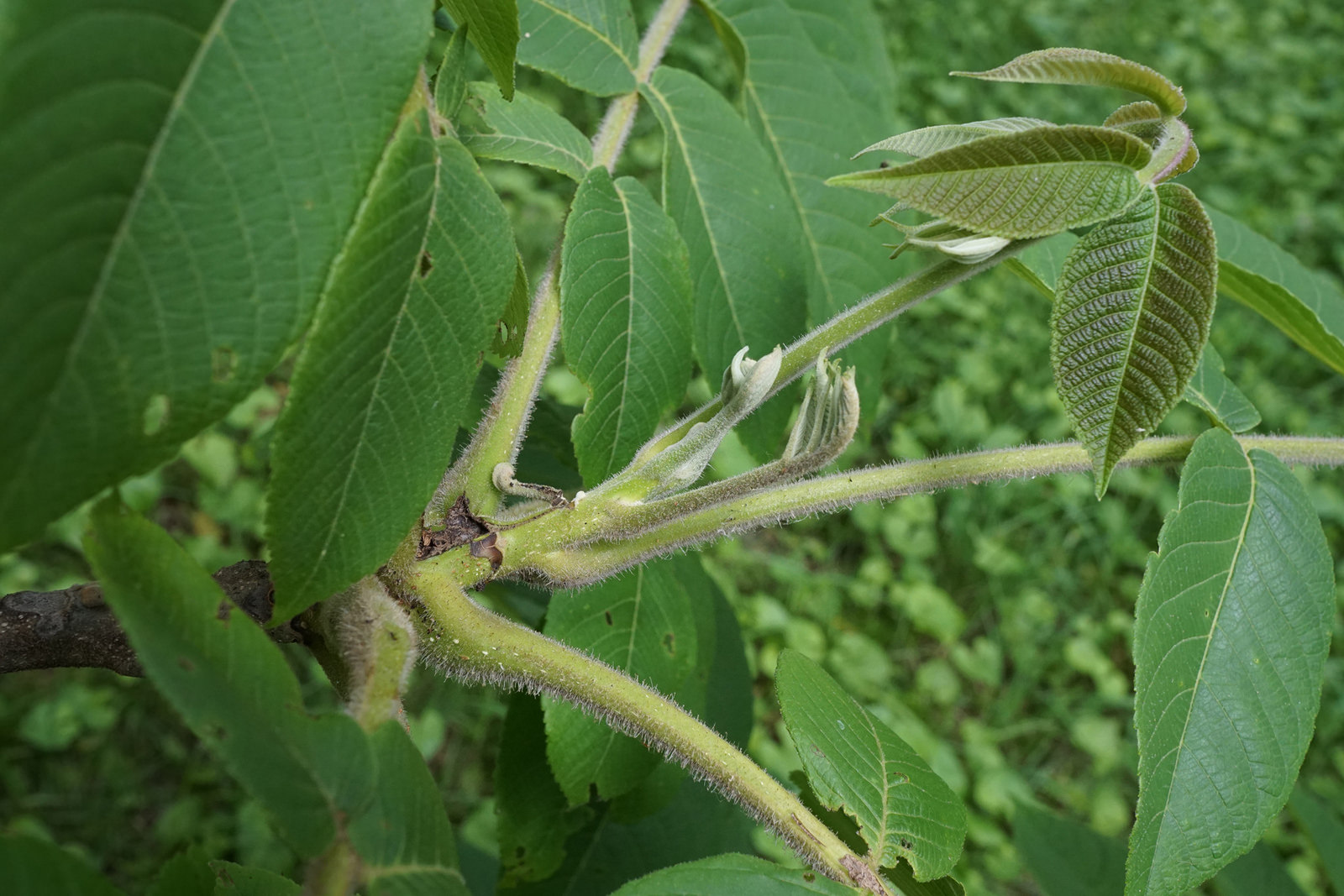
Much of our work is organized around forest health. Current projects examine resistance to butternut canker in Juglans, hemlock woolly adelgid in Tsuga, beech leaf and beech bark disease in Fagus grandifolia, and white pine blister rust in five-needle pines, alongside pangenome projects in Acer and Magnolia and reference genome work across gymnosperms and bryophytes. Through the NSF Biology Integration Institute EVOME, we ask whether Arctic species and ecosystems can evolve at the pace of a warming climate. Through the Biodiversity and Conservation Genomics program in the Institute for Systems Genomics, we generate the first genomic resources for IUCN Red List species, including animals as well as plants.
We also build the software and infrastructure this work depends on. CartograPlant (cartograplant.org) integrates genotypic, phenotypic, and environmental data for georeferenced plant populations, linking over 20 million records from more than 800 species to roughly 1,000 environmental layers, and providing analytic capacity to FAIR population data. We also develops and maintains EASEL and EnTAP, both open source, for genome and transcriptome annotation.
The PCG lab welcomes students from traditional biology backgrounds as well as more computational ones. Our team is multi-disciplinary, and we collaborate with conservation practitioners and researchers around the world. Learn more about our research here!
Potential research topics include:
- Pangenome construction, structural variant discovery, and epigenomic profiling to identify the basis of disease resistance and climate resilience in threatened tree species;
- Development of software and deep learning frameworks to improve structural and functional annotation of large, complex, non-model plant genomes and transcriptomes;
- Integration of genomic, phenotypic, and environmental data to study adaptation across landscapes, including the visualization and analysis tools that make such work possible;
- And your ideas here!
To Apply:
Financial support for students is available through research assistantships, teaching assistantships, and university fellowships. Excellent written and oral communication, as well as strong quantitative skills, are required. Backgrounds in genetics/genomics, evolutionary biology, bioinformatics, and computer science are desired. Interested candidates should send an email with a research interest statement (~1 page), a CV/cover letter, and unofficial undergraduate/graduate transcripts to Jill Wegrzyn ([email protected]). Qualified candidates will be contacted directly for Zoom interviews following review. Select candidates will be invited for a campus visit. Applications will be reviewed starting December 15th, 2026.
About UConn:
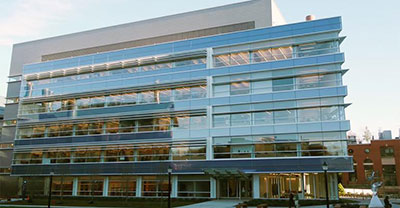
The University of Connecticut (UConn) has been one of the nation’s leading public institutions since its founding in 1881. Located in Storrs, UConn’s main campus is situated in the picturesque rolling forests and fields quintessential of New England, yet is only 30 minutes from Hartford, and has close connections to Providence, Boston and New York. The Department of Ecology and Evolutionary Biology consists of over 30 faculty and 60 graduate students with research spanning nearly all major groups of organisms. The Department maintains close ties with the Departments of Physiology and Neurobiology, Molecular and Cell Biology, Marine Sciences, and Natural Resources Management and Engineering, as well as the Center for Environmental Sciences and Engineering and the Institute for Systems Genomics, which together comprise one of the largest groups of biologists in the Northeast.